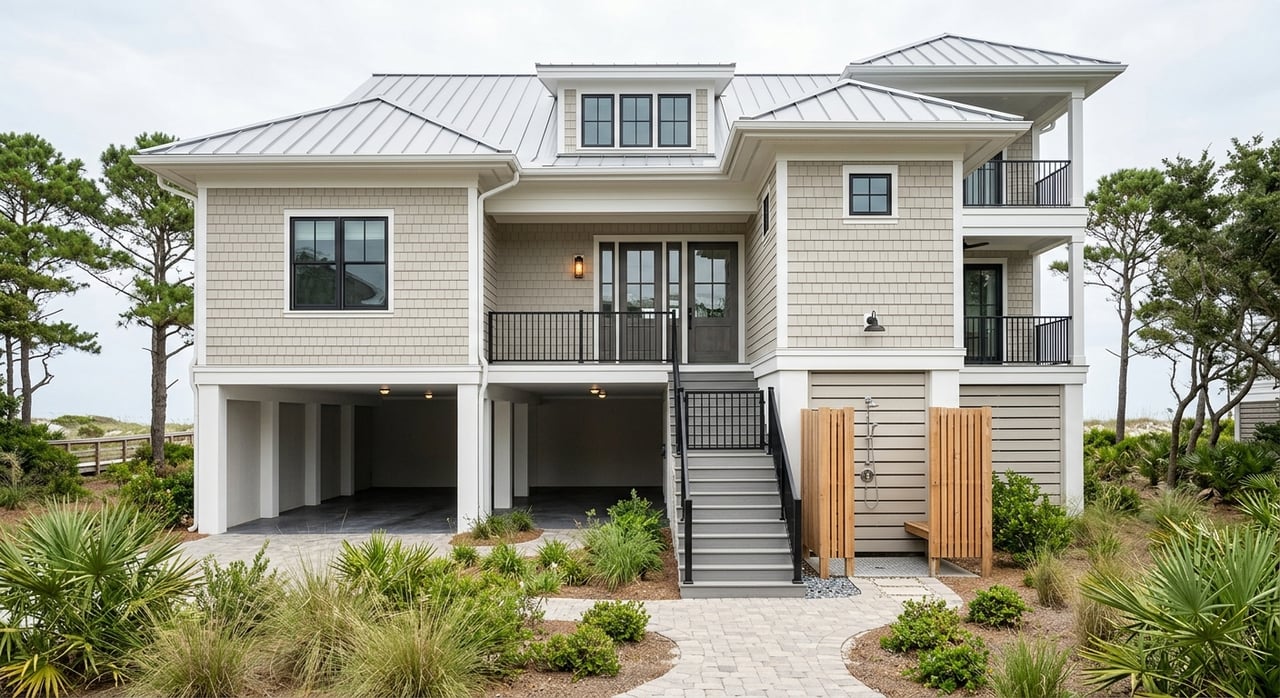
Surfside Beach Or Myrtle Beach For Your Next Home
June 4, 2026
June 4, 2026
If you are trying to choose between Surfside Beach and Myrtle Beach for your next home, you are not alone. Both give you access to the Grand Strand lifestyle, but they can feel very different once you picture your everyday routine. This guide will help you compare the two in plain language so you can decide which coastal setting fits your budget, pace, and goals best. Let’s dive in.
The biggest difference comes down to scale and daily feel. Surfside Beach is the smaller option, with an estimated population of 4,155, while Myrtle Beach is much larger at 40,937. That size gap shows up in everything from traffic patterns to housing choices to how busy the beach feels.
Surfside Beach describes itself as a small seaside community with a laid-back, residential setting close to area attractions. Myrtle Beach, by contrast, is known for a denser entertainment area centered around the Boardwalk and Promenade, shops, restaurants, and nearby attractions like the SkyWheel and Broadway at the Beach. If you want quieter day-to-day living, Surfside Beach may stand out. If you want more activity close by, Myrtle Beach may be the better fit.
Surfside Beach tends to appeal to buyers who want a more relaxed beach-town rhythm. The town highlights its small-town, laid-back environment, along with an active residential base and two miles of beach. Many daily conveniences, including restaurants, supermarkets, mini-golf, the town-owned fishing pier, and a water park, are within a short walk or golf-cart ride.
That setup can make daily life feel simple and local. Instead of a larger tourism corridor, you get a more compact coastal footprint where routines may feel easier to manage. For many buyers, that is a big part of Surfside Beach’s appeal.
Surfside Beach may be a strong match if you are looking for:
Because the town is smaller, buyers often pay a premium for that setting. If your priority is calm, convenience, and a stronger small-town identity, that premium may feel worthwhile.
Myrtle Beach offers a different experience. The city’s entertainment core is more active, with the 1.2-mile Boardwalk and Promenade, restaurants, shops, and attractions all clustered in a denser area. This creates a more energetic, visitor-oriented atmosphere than Surfside Beach.
For some buyers, that is exactly the point. You may like having more places to go, more public beach access points, and a wider range of housing options. If you want variety and a busier coastal setting, Myrtle Beach gives you more of both.
Myrtle Beach may be a better fit if you want:
For buyers relocating to the coast or shopping for a second home, that wider inventory can create more flexibility. It can also make it easier to compare several property types in the same search.
Beach access matters more than many buyers expect. It affects parking, routines, mobility, and how easy it feels to enjoy the coast on a normal weekday, not just on vacation.
Surfside Beach keeps access within a compact area. The town provides parking at 12 beach-area lots, including some oceanfront spaces. It also offers wheelchair access at several entrances, beach walking mats, and special beach wheelchairs through the police department.
Myrtle Beach has a much larger public access network, with 114 public beach access points. Many are fully accessible or ramp-accessible, and beach-going wheelchairs are also available in the area. That broader system can be a plus if you want more options, but it also reflects a higher-demand beach environment.
Parking helps show how each place functions day to day. Surfside Beach’s beach access is tied to a smaller-town layout. Myrtle Beach uses a more structured paid parking system, with paid parking in effect from 9:00 a.m. to midnight, seven days a week, and different rates for beach-access and business areas.
That does not make one better than the other. It simply reinforces the broader lifestyle difference. Surfside Beach feels more compact and residential, while Myrtle Beach operates more like a major coastal destination.
If your decision is heavily shaped by what is actually available for sale, the contrast is clear. Surfside Beach has a smaller, more neighborhood-scale inventory. Current Redfin listing pages show 14 condos and 9 townhouses, along with categories such as land, single-story homes, waterfront homes, luxury homes, and new homes.
Myrtle Beach has much deeper inventory. Current Redfin listing pages show 1,814 condos and 251 townhouses, along with additional categories including single-story homes, mobile homes, land, and fixer-uppers. That means more choice, more price points, and more opportunities to compare options.
A smaller inventory like Surfside Beach often means you may need to be patient and decisive when the right property appears. A larger inventory like Myrtle Beach can offer more room to compare buildings, layouts, locations, and price tiers.
Here is a simple side-by-side view:
| Category | Surfside Beach | Myrtle Beach |
|---|---|---|
| Estimated population | 4,155 | 40,937 |
| Condos for sale | 14 | 1,814 |
| Townhouses for sale | 9 | 251 |
| Condo median listing price | $374K | $200K |
| Townhouse median listing price | $675K | $346K |
Based on this inventory mix, Surfside Beach appears more concentrated in lower-density coastal housing. Myrtle Beach offers a broader and more segmented market.
Budget is often where the choice becomes clearer. Recent market data for the three months ending April 2026 shows Surfside Beach with a median sale price of $529,726, while Myrtle Beach’s median sale price was $231,880. That is a significant gap.
The same pattern appears in active listings. Surfside Beach condo median listing prices were $374K, compared with $200K in Myrtle Beach. Townhouse medians were $675K in Surfside Beach and $346K in Myrtle Beach.
The two markets also move at different speeds. Surfside Beach homes sold in a median of 62 days, while Myrtle Beach homes sold in a median of 113 days over the same period. Both markets were labeled not very competitive, but Surfside Beach was still the faster-moving of the two.
For you as a buyer, that may mean a little more urgency in Surfside Beach when a home checks the right boxes. In Myrtle Beach, the larger inventory and slower pace may give you more breathing room.
If you are deciding between Surfside Beach and Myrtle Beach, it helps to think beyond the beach itself. Ask yourself what kind of daily life you want once the move is complete.
Choose Surfside Beach if your top priorities are:
Choose Myrtle Beach if your top priorities are:
Neither choice is universally better. They simply serve different preferences within the same broader coastal region.
On paper, Surfside Beach and Myrtle Beach may look like neighboring beach markets. In real life, they offer very different buying experiences. The right choice often comes down to how you want to live, what property type you want, and how your budget lines up with today’s inventory.
That is where local guidance can make the process easier. With deep roots along the South Carolina coast and years of experience helping buyers and sellers across the Grand Strand, William Bill Moody can help you compare communities, narrow your search, and move forward with clarity.
Stay up to date on the latest real estate trends.
With over 30 years of experience and deep roots in the Grand Strand, I bring trusted guidance and local insight to every transaction. Whether you're selling your current home or searching for the perfect place by the beach, I provide strategic advice, attentive service, and clear communication from start to finish. My goal is to make your move seamless, informed, and completely stress-free.